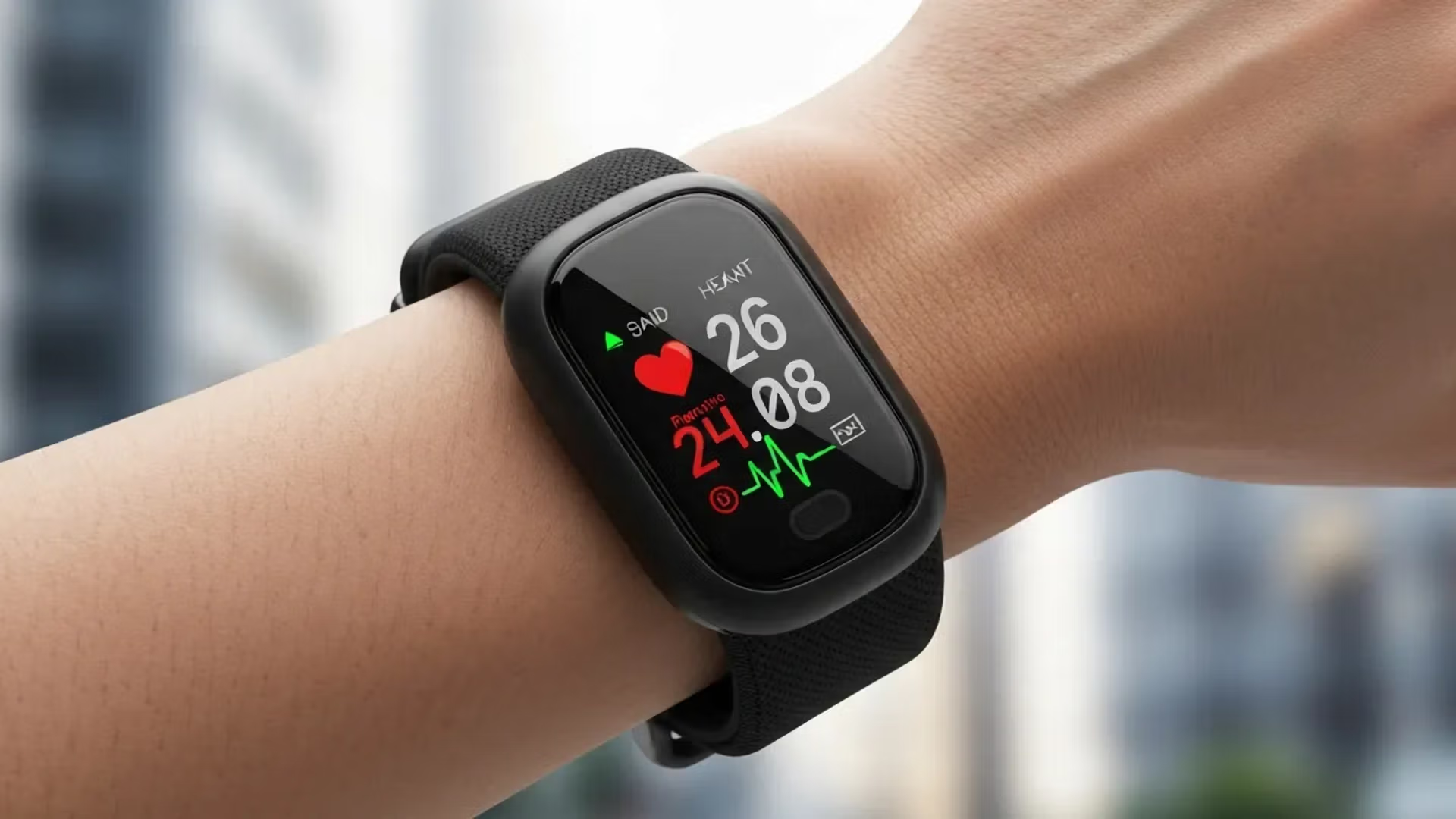
If you’re serious about fitness, fat loss, or endurance training, one thing matters more than fancy features: accurate heart rate data. That’s why choosing between chest straps and wrist-based monitors is a decision that can completely change your results.
In this guide on the best budget heart rate monitors for chest vs wrist sensors, I’ll break down what actually works in 2026—and what’s just marketing hype.
Look, I’ve tested both chest straps and wrist wearables during runs, gym sessions, and even sleep tracking so you don’t have to guess. And here’s the truth: both have their place—but they are NOT equal in accuarcy.
Let’s dive in.
Chest vs Wrist Heart Rate Monitors: What’s the Real Difference?
At the core, these devices use different types of bio-sensors.
Chest Strap Monitors (ECG-Based Tracking)
Chest straps measure electrical signals from your heart—similar to ECG monitoring.
Top brands like Polar and Garmin dominate this space.
Advantages:
- Extremely high accuarcy
- Real-time responsiveness
- Best for HIIT, running, cycling
Limitations:
- Less comfortable
- Not ideal for 24/7 wear
Wrist-Based Monitors (Optical Sensors)
Wrist devices (smartwatches, fitness bands) use optical sensors to detect blood flow.
Popular options come from Xiaomi and Huawei.
Advantages:
- Comfortable and convenient
- Great for all-day tracking
- Tracks HRV, SpO2, sleep
Limitations:
- Slight delay in readings
- Less reliable during intense workouts
Real Talk:
If you’re training seriously—chest straps win. If you want lifestyle tracking—wrist sensors are more practical.
Best Budget Chest Strap Heart Rate Monitors (2026)
1. Polar H9


8
Why it’s the best budget chest strap: Reliable, accurate, and affordable.
Key Features:
- ECG-level heart rate monitoring
- Bluetooth & ANT+ connectivity
- Works with multiple fitness apps
- Long battery life (400+ hours)
Real Talk:
This is the gold standard for budget chest straps. If your serious about training zones, just get this.
2. Garmin HRM-Dual


7
Why it stands out: Best for ecosystem integration.
Key Features:
- Dual connectivity (ANT+ & Bluetooth)
- Accurate heart rate data
- Comfortable strap design
Real Talk:
If you’re already using Garmin devices, this fits perfectly into your setup.
Best Budget Wrist-Based Heart Rate Monitors (2026)
3. Xiaomi Mi Band 8


6
Why it’s popular: Best value fitness tracker.
Key Features:
- Continuous heart rate monitoring
- SpO2 tracking
- Sleep tracking with AI insights
- HRV estimation
Real Talk:
For the price, this thing is ridiculous. Perfect for beginners.
4. Huawei Band 9


6
Why it stands out: Better health tracking accuarcy.
Key Features:
- Improved optical heart rate sensor
- Advanced sleep tracking
- Stress monitoring via HRV
- Lightweight design
Real Talk:
One of the most accurate wrist-based options in the budget segment.
5. Realme Band 2


6
Why it stands out: Balanced features for the price.
Key Features:
- 24/7 heart rate monitoring
- SpO2 tracking
- Multiple sports modes
Real Talk:
Not the most accurate—but solid for casual users.
Comparison Table: Chest vs Wrist Heart Rate Monitors
| Feature | Chest Strap | Wrist-Based |
|---|---|---|
| Accuracy | ⭐⭐⭐⭐⭐ | ⭐⭐⭐ |
| Comfort | ⭐⭐ | ⭐⭐⭐⭐⭐ |
| Real-time Response | Excellent | Moderate |
| Sleep Tracking | Limited | Excellent |
| HRV Tracking | Advanced | Basic |
| Battery Life | Very Long | Moderate |
| Best Use | Training | Lifestyle tracking |
Health Metrics Explained (Why They Matter)
Heart Rate Variability (HRV)
HRV tells you how well your body is recovering.
- High HRV = ready to train
- Low HRV = rest needed
Chest straps measure HRV more accurately than wrist devices.
SpO2 Monitoring
Wrist-based devices dominate here, especially for:
- Sleep tracking
- Oxygen saturation levels
ECG Monitoring
Chest straps simulate ECG-like readings, making them ideal for:
- Performance athletes
- High-intensity training
AI-Driven Insights
Modern devices now:
- Suggest recovery days
- Optimize training zones
- Track long-term trends
This is where 2026 wearables are evolving fast.
Step-by-Step Guide: How to Optimize Your Heart Rate Monitor
So you bought one—now let’s make sure it actually improves your fitness.
Step 1: Choose the Right Fit
- Chest strap: snug but comfortable
- Wrist device: tight enough to avoid movement
Loose fit = bad data accuarcy.
Step 2: Pair with the Right App
Use apps like:
- Polar Flow
- Garmin Connect
- Google Fit
Sync your device properly.
Step 3: Set Heart Rate Zones
Most people skip this.
Define:
- Fat burn zone
- Cardio zone
- Peak zone
This helps you train smarter, not harder.
Step 4: Enable Continuous Tracking
Turn on:
- 24/7 heart rate
- HRV tracking
- Sleep monitoring
Yes, it drains battery—but gives better insights.
Step 5: Track Trends, Not Just Numbers
Don’t obsess over one workout.
Look at:
- Weekly averages
- Recovery trends
- Resting heart rate
That’s where real progress happens.
Step 6: Combine with Other Metrics
For best results, combine:
- HRV
- Sleep quality
- Activity levels
This creates a complete health picture.
Battery Life: What You Should Expect
Here is the real talk about battery life claims.
- Chest straps: months (replaceable battery)
- Wrist devices: 5–14 days
If you hate charging—chest straps win easily.
Who Should Choose What?
Choose Chest Strap If:
- You do HIIT or endurance training
- You need maximum accuarcy
- You train based on heart rate zones
Choose Wrist-Based Monitor If:
- You want all-day tracking
- You care about sleep insights
- You prefer convenience
Pro Tip
Many athletes use BOTH:
- Chest strap for workouts
- Wrist device for daily tracking
Honestly, this is the smartest setup.
Future Trends in Heart Rate Monitoring
The future is exciting:
- Non-invasive glucose monitoring
- AI-based fatigue prediction
- Clinical-grade ECG integration
- Smarter bio-sensors
The gap between medical and consumer devices is shrinking.
Final Verdict: Chest vs Wrist—Which Is Better?
Here’s the honest answer:
- Best for accuracy: Chest straps (Polar H9)
- Best for convenience: Wrist devices (Mi Band 8, Huawei Band 9)
There is no “one-size-fits-all.” It depends on your goals.
Why wearfit.xyz Recommends Smart Monitoring in 2026
At wearfit.xyz, we believe data should actually help you—not confuse you.
Heart rate monitoring is one of the most powerful tools for:
- Fat loss
- Endurance building
- Recovery optimization
But only if you use it correctly.
Final Call to Action
Ready to train smarter, not harder?
Choose from the best budget heart rate monitors for chest vs wrist sensors, start tracking your performance, and finally understand what your body is telling you.
Visit wearfit.xyz for expert reviews, latest deals, and next-level health tech insights—because your fitness deserves precision.